

Tree-Killing Pest from Japan is in Upstate New York for First Time in 40 Years
DEC Warns of Invasive Pest in Upstate New York
A tree-killing pest native to Japan has been identified in Upstate New York forests for the first time in 40 years, and environment conservationists want to know if you've seen it.
According to the Adirondack Explorer, the Red pine scale, an insect native to Japan, was found on Lenni-Lenape Island on Lake George - about 90 minutes north of Albany, last summer.

What is the "Red Pine Scale"
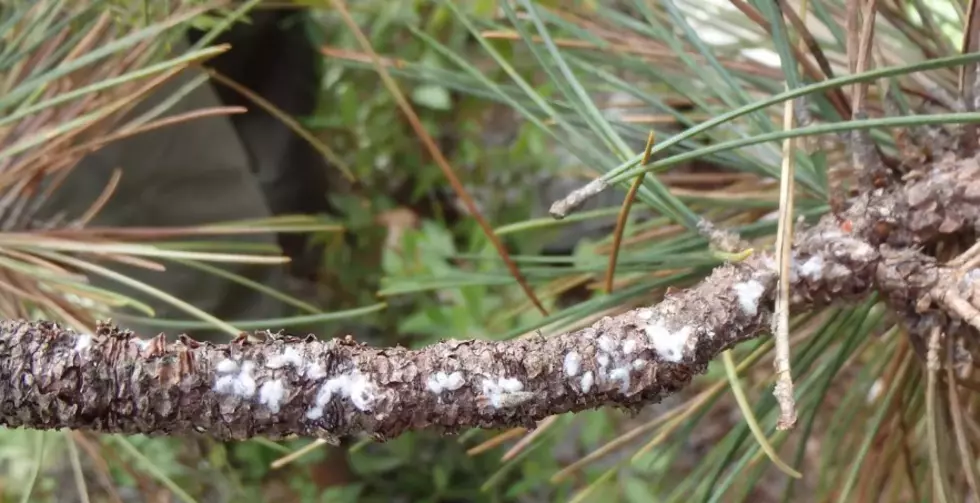
The red pine scale insect was first detected in the United States in 1946, and according to the National Park Service, the scale insect is about the "size of a pin-head and covers itself with a protected white woolly substance visible on branches."
The invasive insect weakens and kills red pine trees in New York by feeding on the sap of red pine trees, causing the foliage to change color and the tree to die.
While it's not unusual for the insect to be detected in some New England states, the Adirondack Explorer reported that "this is the farthest north in New York state it has been detected."
Due to their specific habitat requirements, red pines are not particularly widespread in the Adirondacks due to their particular habitat requirements, but the DEC wants to prevent further growth.
The Adirondack Explorer says the DEC had detected the invasive pest in Dutchess County many years ago, which occurred during a survey in 1985.
Red Pine Identification
•Tall, straight trunk with lower branches falling off with age (self-pruning)
•Reddish-brown, plated bark
•Needles are 4-6” long, 2 per cluster, and break cleanly when doubled
•Cones are 2” long, egg-shaped, and without prickles
What to Do if You Spot It
The NYS DEC asks people who see dead or dying red pine trees with “wool” around the base of the needles to send photos and location info to foresthealth@dec.ny.gov.
Greene said people can also report sightings through https://www.nyimapinvasives.org/ or by contacting APIPP.
LOOK: The most expensive weather and climate disasters in recent decades
Gallery Credit: KATELYN LEBOFF
LOOK: Here are the states where you are most likely to hit an animal
Gallery Credit: Dom DiFurio & Jacob Osborn
More From 107.7 WGNA